The short answer
The aim is not a silent office. It is a choice of comfortable, usable settings, supported by considerate working habits. Phone booths and focus pods can be part of that mix, but they do not replace good management, manageable workloads or proper breaks.
Start with the interruptions people actually experience
Ask colleagues when the office feels hardest to use. Is it overlapping video calls, conversations beside desks, a printer next to a writing team, or nowhere to go when a call arrives unexpectedly? These are different problems. A useful quiet-space brief describes the situation rather than labelling a whole office, or a particular team, as too noisy.
For a week, invite people to note the task, time and setting when they could not find a suitable place to work. Keep this voluntary and avoid collecting private conversation details. Look for repeated friction: a colleague rewriting a proposal beside a sales call, or someone wandering between occupied rooms with a laptop. Those examples tell you where to start.
Give people more say in where they work
HSE’s Management Standard on control includes employees having a say in how they work and being consulted about working patterns. Choosing a setting is one practical design consideration within that broader principle, not a claim that installing a pod fulfils the standard.
Make quiet space a normal option rather than a privilege that needs explaining. Someone might enjoy collaborative desk work in the morning and need an uninterrupted setting to finish a detailed document later. Agree which spaces support calls, which are for quiet work and how people can move between them without being seen as unavailable or unhelpful.
Separate conversation space from concentration space
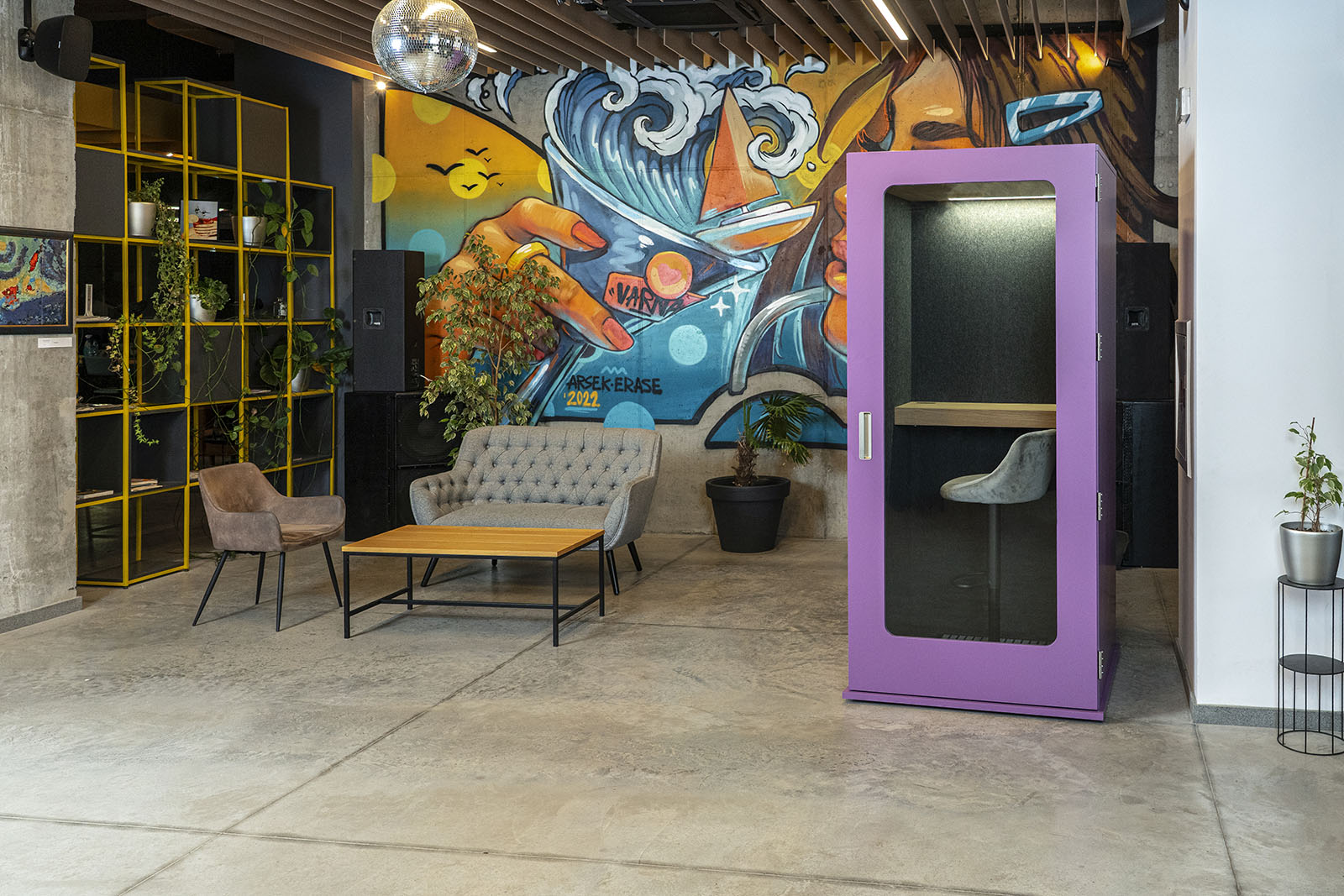
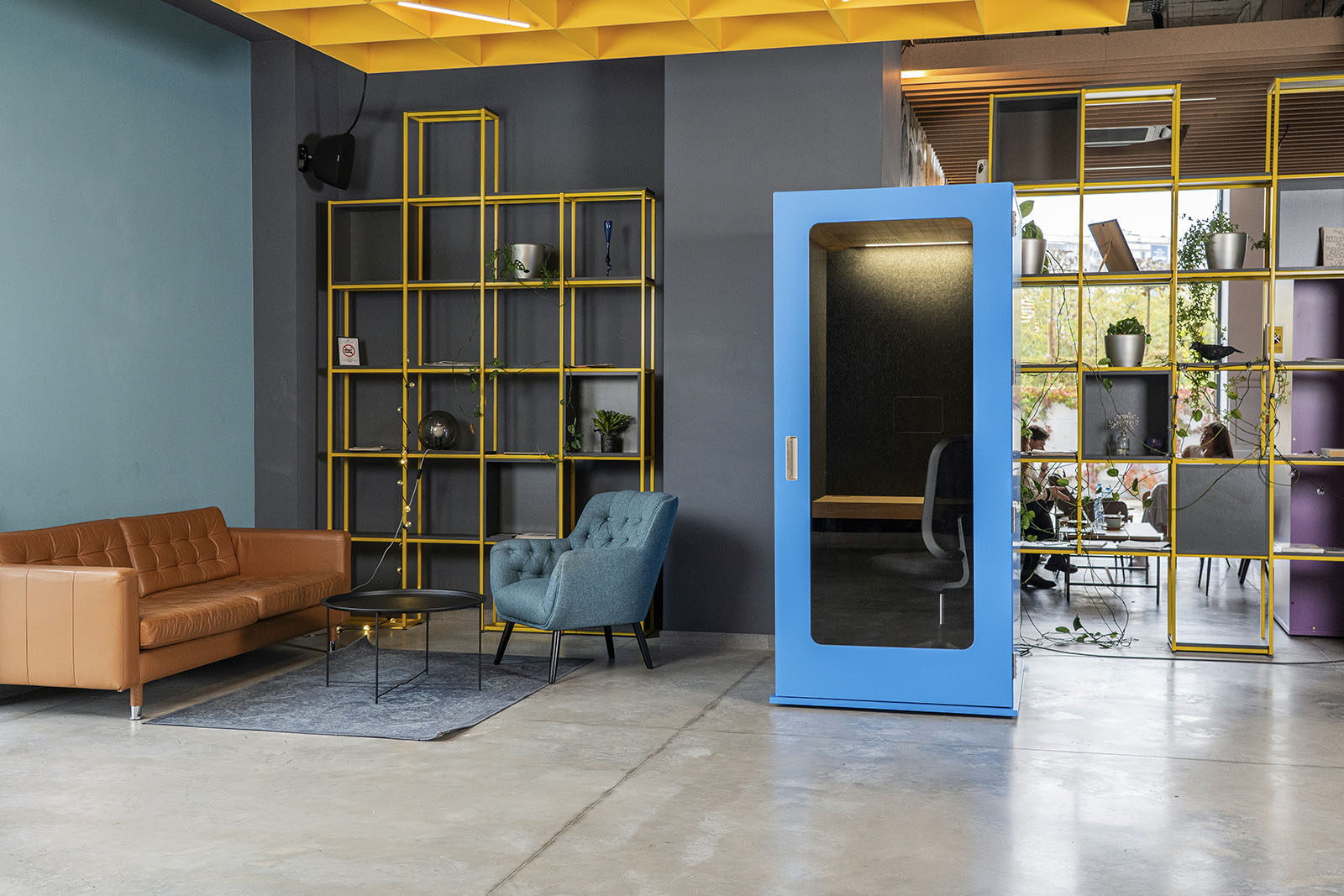
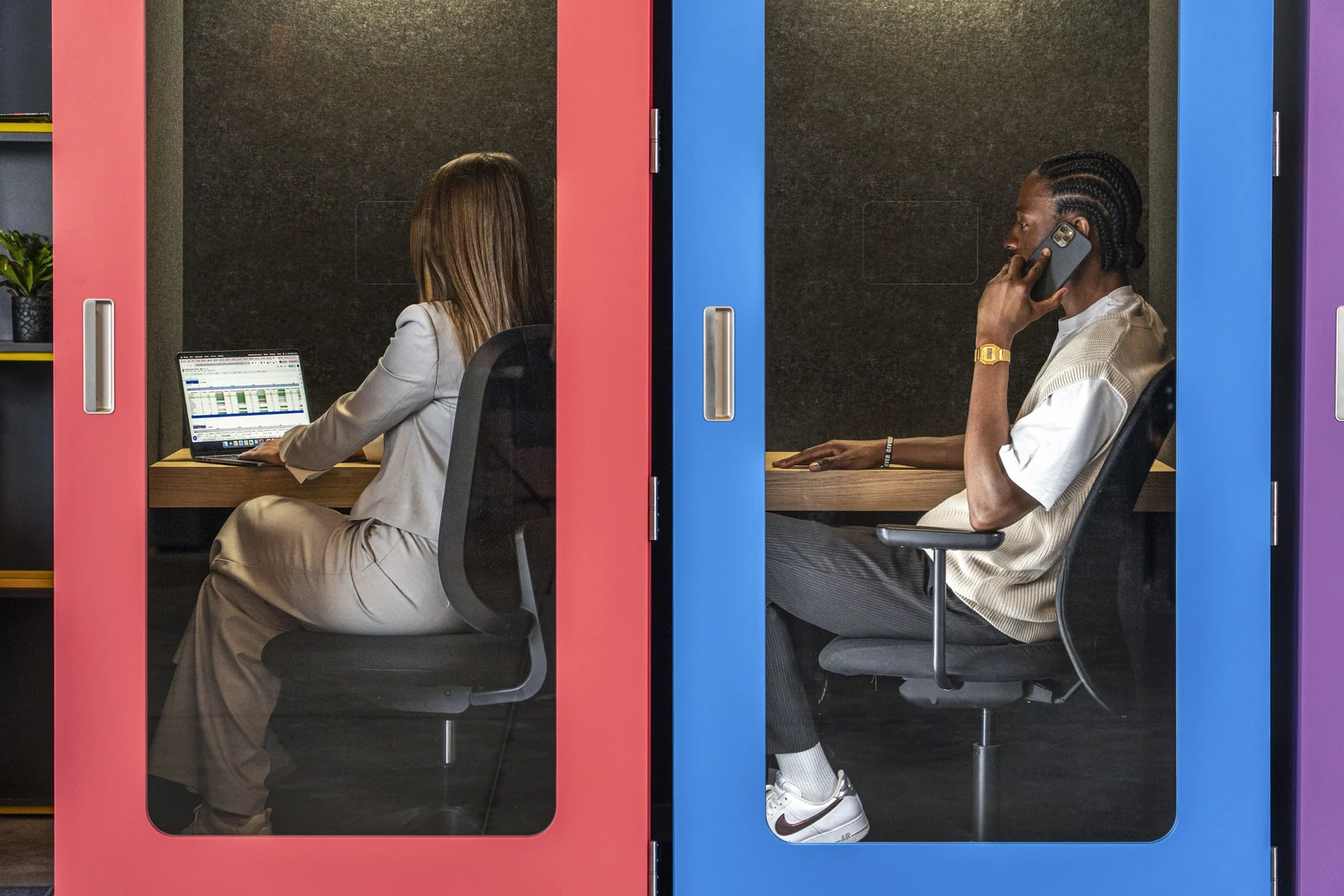
Consider a desk area where several people regularly join separate video meetings. Asking everybody to speak more quietly may not resolve the conflict between talking and concentrating. A nearby phone booth gives the caller an alternative setting and can help contain conversation noise, while the surrounding desks remain available for other work.
Acoustic performance is model-specific. A booth should not be described as completely silent or assumed to guarantee confidential conversations. Check the relevant test report and consider its location, nearby activity and intended use. For sensitive discussions, assess speech privacy separately rather than relying on the word “soundproof”.
Match the space to the length of the session
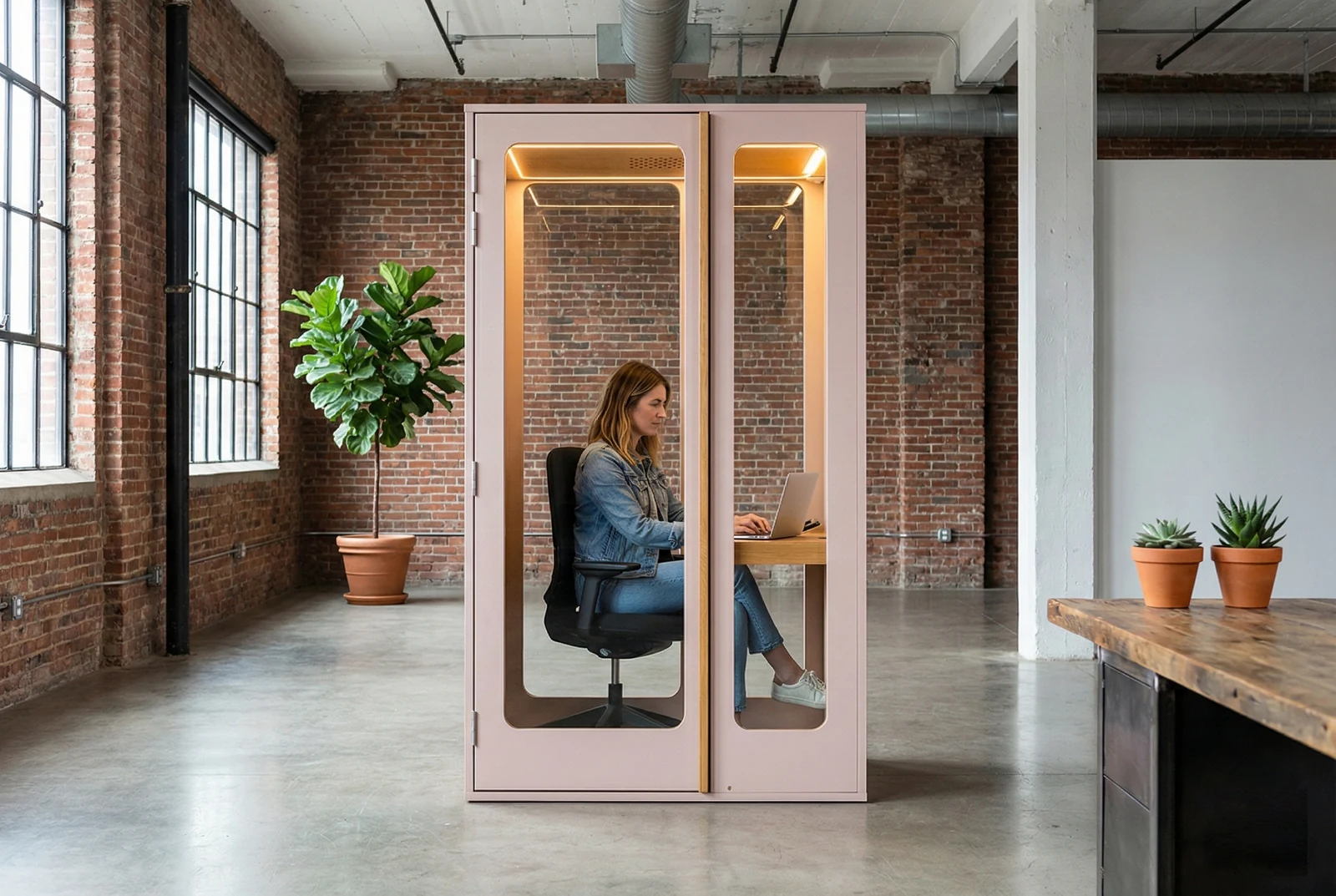
A quick supplier call and an hour of screen-based work should not automatically have the same setup. For short calls, compare phone booths such as MEAVO Soho. For longer seated sessions, look at focus pods such as the MEAVO Workstation and check the usable desk area, chair movement, screen position, lighting and ventilation.
Try the actual task with the equipment people use. A space that looks comfortable in a photograph may not suit a large laptop, a separate keyboard or a particular chair. A focus pod is an additional work setting, not a reason to keep someone enclosed all day or dispense with breaks and workstation checks.
Make access fair and the rules easy to follow
A quiet space is only useful if people can use it when needed. Avoid a system where one person books the only focus pod for an entire day. Consider separate arrangements for brief unplanned calls and longer sessions, with a simple way to release unused reservations. Make the approach understandable to visitors and new starters too.
People differ in their preferences for sound, lighting and enclosure. Ask what works for them rather than assuming one solution suits everyone. Check access, controls and furniture with the intended users, and retain suitable alternatives where a particular booth is not usable or comfortable. Nobody should have to disclose a health condition simply to explain a preference for quieter work.
Keep wellbeing bigger than the furniture
MEAVO’s article “What Can Improve Employee Wellbeing?” looks beyond the physical office to work-life balance, development and feeling valued. It is useful further reading alongside a space-planning project: a new booth does not address an unreasonable workload, poor support or expectations to remain available after hours.
Treat an office change as a conversation with the people who use it. Explain the problem you are trying to solve and invite feedback once the space is in use. Avoid promising a percentage improvement in productivity or a reduction in sickness absence from a furniture purchase. Those outcomes depend on much more than the layout.
Further reading from MEAVO: What Can Improve Employee Wellbeing?
Judge success by a better working day
Review the change after several normal working weeks, including busy office days. Ask whether people can find a suitable place for calls, whether quiet desks are interrupted less often and whether the new settings are comfortable. If a booth is rarely used, investigate location, ventilation, equipment and booking rules before concluding that there is no demand.
Start with a clear brief and compare a small shortlist. Our phone booth collection covers individual call spaces, while focus pods support a different seated-work brief. Share your intended tasks, floor plan and access requirements when requesting a quote so the conversation starts with the people and work you need to accommodate.
- Can people find a suitable space at the times they need it?
- Do users find the lighting, seating and ventilation comfortable?
- Are the booking arrangements fair and easy to understand?
- What should change before adding more booths?
Written by Office Acoustics Ltd. General buying and planning guidance, not a substitute for model-specific instructions or a site assessment. Confirm current specifications and local availability before ordering.