The short answer
Match the room to the conversation. A one-person call booth and a shared meeting pod are complementary tools, not interchangeable sizes of the same purchase.
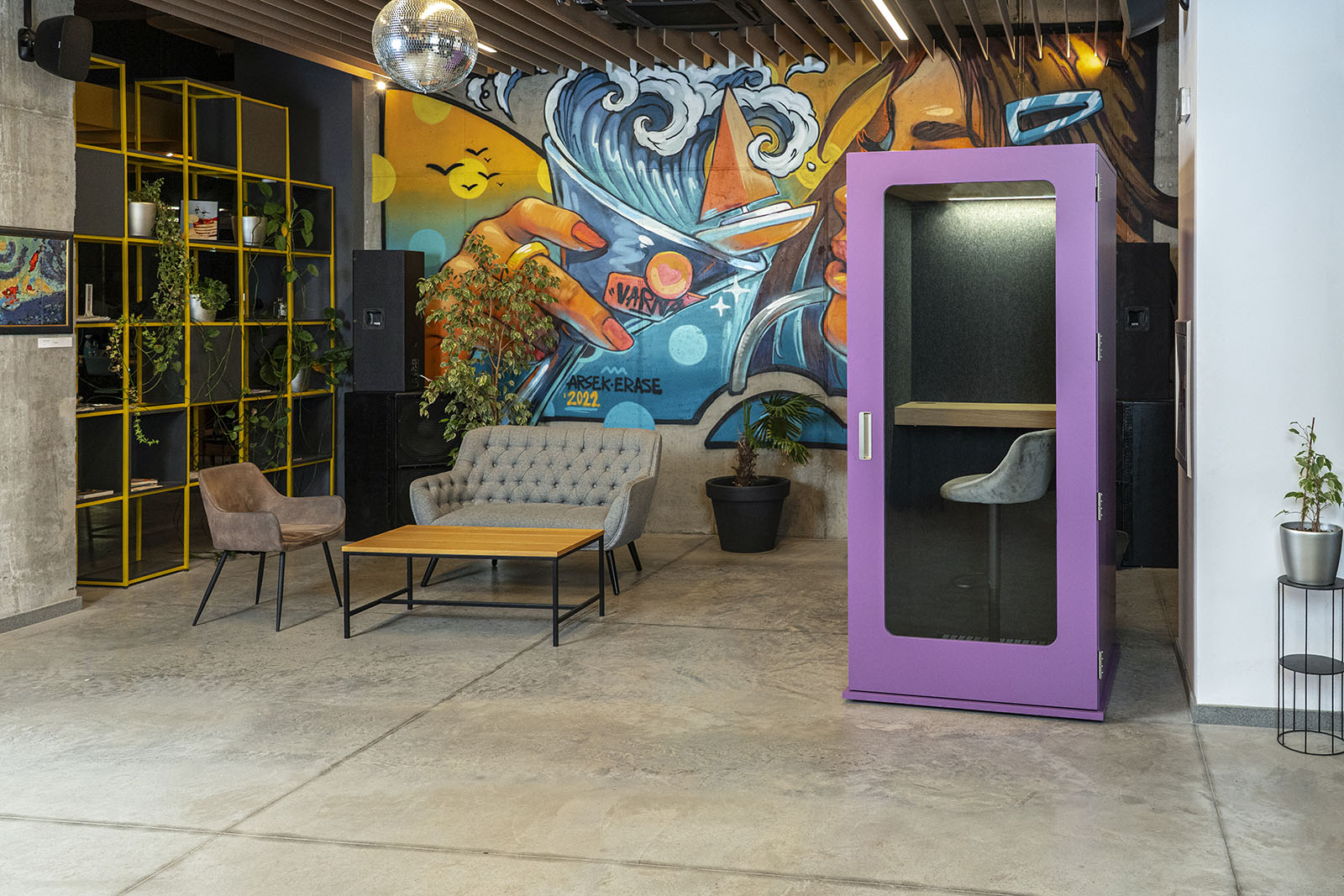
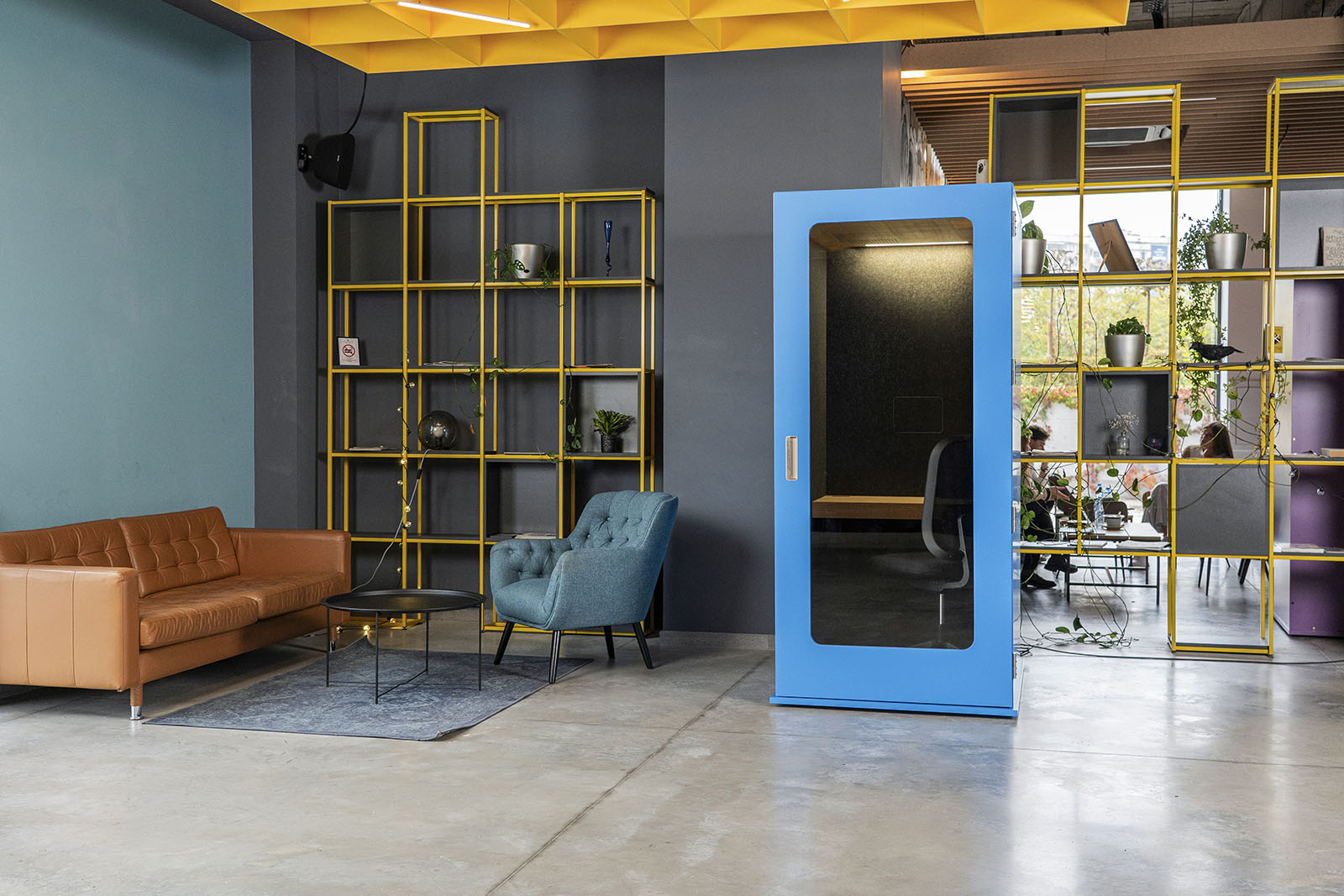
A phone booth: a place for one conversation
Start with an individual phone booth when calls are the main need. Think about how quickly someone can step inside, position a laptop or phone and get started. For short sessions, the relationship between the work surface and the user matters more than a long list of optional technology.
In the featured MEAVO range, Soho is the single-person phone-booth option. Our collection also shows individual COMINE and FlexiSpot configurations. Their specifications are not interchangeable: check the exact version, furniture and UK availability rather than assuming that all one-person booths offer the same setup.
A focus pod: a more deliberate work setting
If the planned activity is a long video presentation or a substantial piece of desk work, compare seated focus pods. Look closely at chair movement, screen position and the usable work surface. There is a difference between fitting a laptop inside a space and being able to work there comfortably.
MEAVO positions its Workstation for individual focus and longer conference calls. The relevant question for your office is whether that layout suits your users and equipment. Do not decide from a photograph alone; assess the complete workstation and establish how it will complement, rather than automatically replace, existing desks.
A meeting pod: room to work together
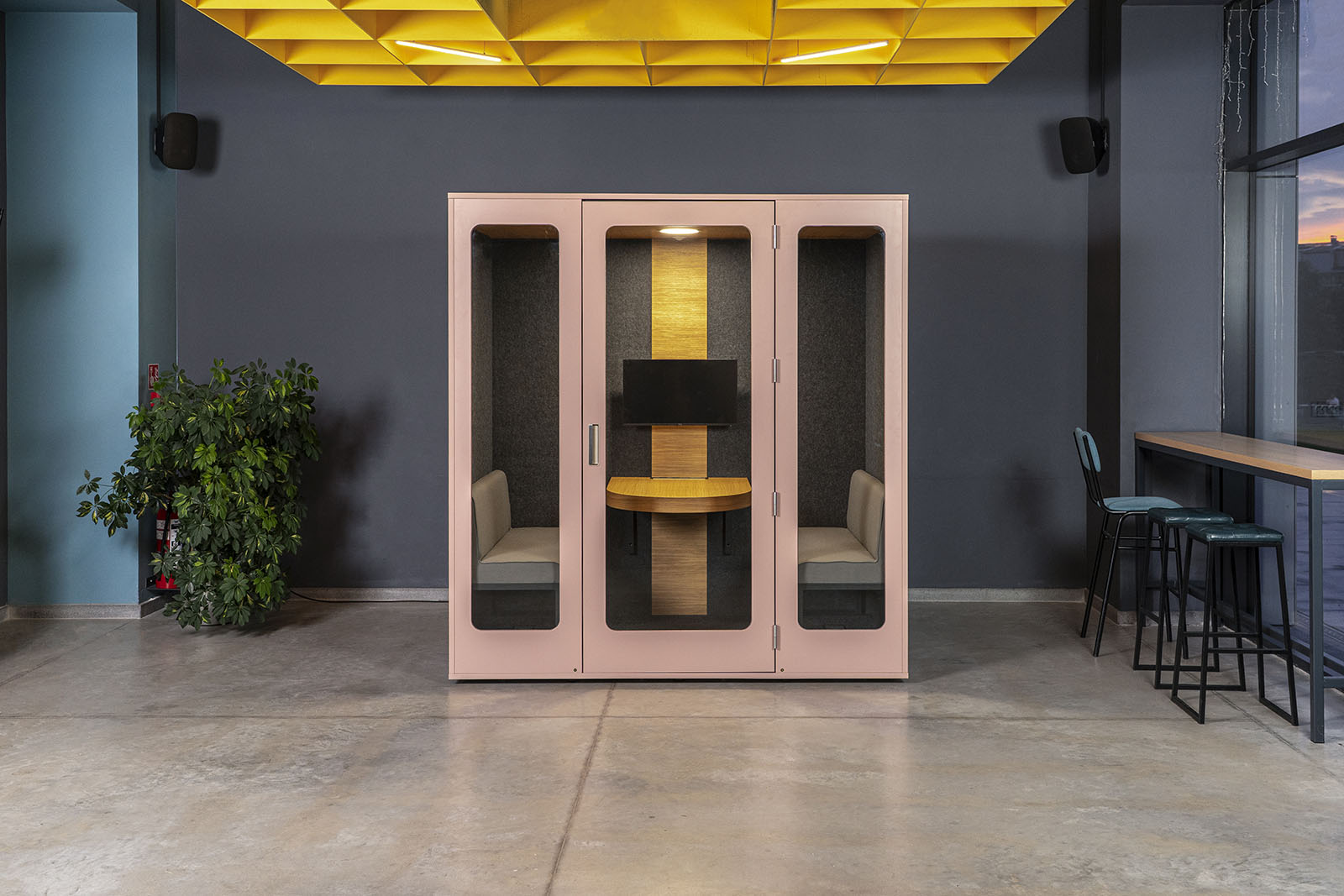
For one-to-ones, interviews or small project discussions, consider a shared meeting pod. Think about what happens during the meeting: two people talking across a table need a different setup from four people using laptops while a remote colleague joins on a screen.
The Camden range offers two-person and four-person configurations. This gives you a useful comparison point when writing a brief, but capacity alone is not a complete specification. Review table size, seating, access and the view of any shared screen. Equipment shown in a staged interior should be checked against the quotation.
Work out the mix before the quantity
Rather than using an arbitrary number of booths per employee, observe how the office is used over a representative period. Note when people leave their desks to take calls, how many of those calls overlap and how often larger meeting rooms are occupied by one person. Include busy office days, not just quiet ones.
Consider a hypothetical team with many overlapping solo calls and occasional four-person discussions. Several individual spaces plus access to a shared pod may be worth comparing with an all-meeting-pod proposal. This is a planning example, not a prescribed ratio: your pattern of simultaneous demand should shape the shortlist.
- Separate solo-call demand from group-meeting demand.
- Record peak overlap as well as average use.
- Ask which needs existing rooms already cover.
- Plan a review after the spaces have been used.
Make the new spaces work with the old ones
Decide how each space will be used before it arrives. Should short calls be first-come, first-served? Will longer meetings need a booking process? Simple expectations can help avoid a focus pod becoming someone’s permanent private desk while other colleagues cannot find somewhere to call.
A pod is not automatically a substitute for every enclosed room. Consider accessibility, sensitive conversations, larger gatherings and building-specific requirements separately. The aim is a useful mix of settings. Start with the tasks your office struggles to accommodate, then choose the formats that address those tasks with a clear, practical brief.
Written by Office Acoustics Ltd. General buying and planning guidance, not a substitute for model-specific instructions or a site assessment. Confirm current specifications and local availability before ordering.